

Back to Articles Laurence Jankelow•Jan 20, 2026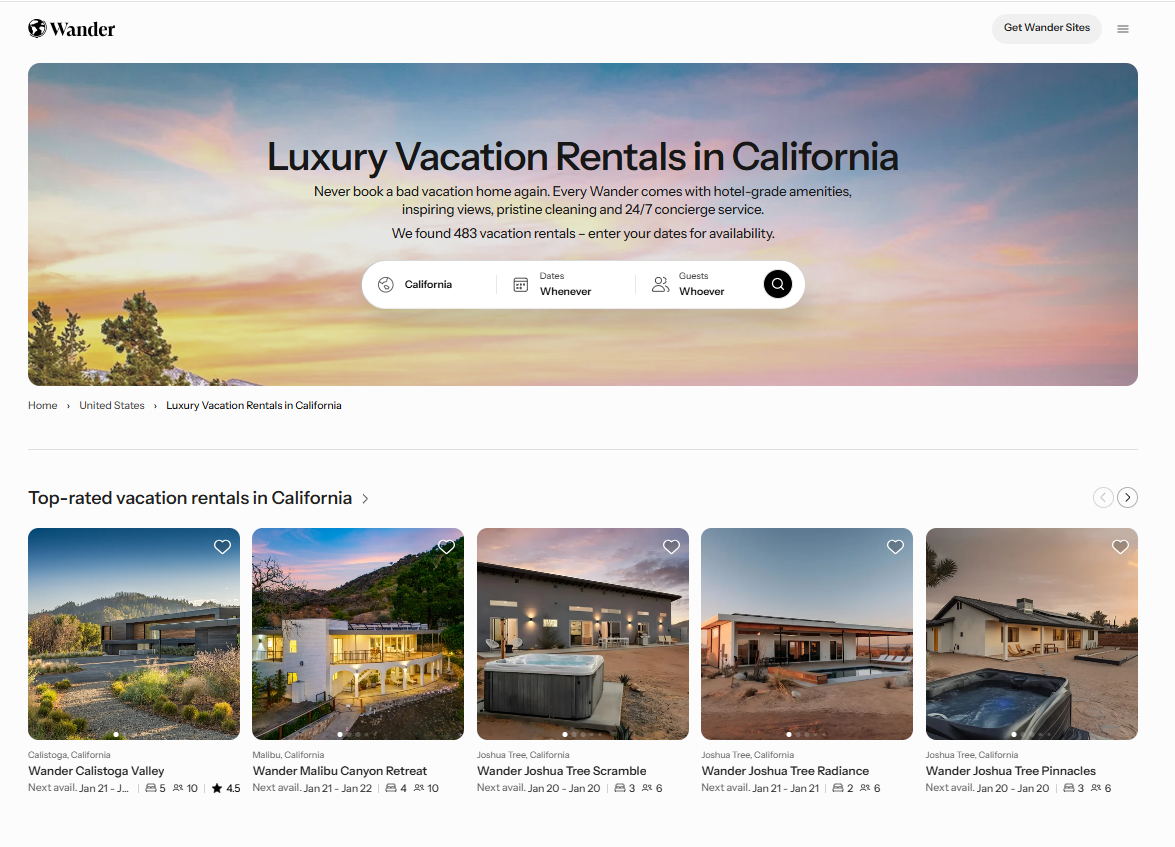
On-Page SEO vs Off-Page SEO for Vacation Rental Websites
Laurence Jankelow•Jan 20, 2026SEO is often talked about as if it’s a set of tactics you pick and choose from.
Do on-page SEO or off-page SEO. Focus on content or links. Fix the site or promote it.
And for vacation rental brands trying to drive direct bookings, that framing is not just unhelpful, it’s actively limiting.
The reality is that on-page SEO and off-page SEO are not competing approaches. They’re complementary parts of the same system.
You need both, working together, to build visibility, trust, and long-term demand for your properties from search.
And that matters more than ever.
These two core pillars of SEO determine how visible you are in Google, whether you appear in AI-powered travel recommendations and, ultimately, how dependent you remain on OTAs to fill your calendar or if you’re driving direct bookings.
And it’s all about how well you balance relevance and authority; both on your site and on other sites across the web.
This guide breaks down what on-page SEO and off-page SEO actually mean for vacation rentals, why you need both if you really want to win at search, and how to approach both in a way that supports sustainable direct booking growth.
The Three Foundations of SEO
Every successful SEO strategy rests on three foundational areas:
Technical SEO ensures search engines like Google can crawl, index, and understand your website.
On-page SEO ensures your content matches what people are searching for.
Off-page SEO signals that your site is trusted and deserves to rank.
Technical SEO, in most instances, is about having a technically sound site that Google and other search engines easily find your website, understand what your property business offers, and show it to people who are searching for places like yours. It’s rarely a growth-driver; more a growth unblocker if these issues are holding back a site’s growth.
It’s important, don’t get me wrong. But it’s rarely where the focus needs to be to drive growth, unless you’re working with a complex or large site with tens of thousands of pages and a custom CMS.
Most vacation rental businesses aren’t in this situation.
Your growth is going to be driven, for the most part, by on-page SEO and off-page SEO.
And the mistake many sites make is assuming that strong content alone is enough, or that a site’s age or backlink profile can compensate for weak relevance. In practice, neither holds true.
You can publish beautifully written location pages and property collections, but without authority, they struggle to compete against OTAs and established travel platforms. Equally, you can earn mentions and links, but if your site doesn’t clearly satisfy search intent, those signals won’t translate into rankings or bookings.
On-page and off-page SEO work together, and you need to get both right to see success.
On-Page SEO for Vacation Rentals
At its core, on-page SEO is about matching the intent of a searcher.
It’s about understanding what a potential guest is looking for at the moment they search, and ensuring your website provides the clearest, most helpful result.
For vacation rentals, this intent is rarely vague. People aren’t searching for “travel inspiration” in the abstract.
They’re looking to find:
Luxury vacation rentals in a particular destination.
Pet-friendly accommodation near a national park.
Family-friendly vacation homes in a specific city or region.
And these are just a handful of the ways people search.
Each of these searches represents a distinct need. And each needs a page that exists for a clear reason.
Take a look at Wander’s own pages to get an idea of what ranks at the top of Google for these types of terms.
Luxury Vacation Rentals in California
If you offer multiple properties, you’ll want to group these into location pages.
If you have a single property, it’ll be your homepage that’s the most relevant to location-based terms.
Chase Search Intent, Not Keywords
One of the biggest on-page SEO mistakes is treating keywords as isolated targets rather than expressions of intent. Creating a separate page for every keyword variation doesn’t strengthen your site, it fragments it. This is known as keyword cannibalization.
Effective on-page SEO clusters closely related terms into a single, authoritative page that fully covers the topic. That page becomes the definitive answer to the searcher’s question.
For example, instead of creating multiple thin pages for “pet-friendly rentals in Yosemite,” “dog-friendly rentals in Yosemite,” and similar variations, a single, well-structured page that addresses all of those needs will perform far better. The intent is the same, and if you fragment this, you’re competing against yourself.
Search engines have become increasingly good at understanding context. Your job is to make that understanding easy.
Create Content That Deserves to Rank
The best on-page SEO strategy starts with a simple question:
What would genuinely help someone choose to stay here?
Ranking content isn’t about being clever with keywords. It’s about being useful. The pages that perform best don’t just describe a property or location, they guide, reassure, and inform.
Strong on-page content for vacation rentals does three things consistently:
First, it clearly answers the searcher’s question. If someone is looking for family-friendly accommodation, show them why your properties work for families; space, amenities, proximity to attractions, and real considerations parents care about.
Second, it removes friction from booking. The content should naturally lead into finding availability, pricing, and next steps without feeling forced or salesy.
Third, it reflects real knowledge of the location. Generic copy doesn’t win against OTAs. Insight does. Details about neighborhoods, seasons, events, or experiences that only someone familiar with the area and your properties would know.
A useful benchmark is this: if you removed all references to your brand, would the page still be genuinely helpful? If not, it likely needs more substance.
On-Page Optimization is About Making Relevance Clear
While content quality is critical, on-page SEO also relies on clear structural signals that help both users and search engines understand what a page is about.
Title tags should be descriptive and keyword-aligned without being stuffed or repetitive. They exist to set expectations, not to cram in variations.
Headings, starting with a clear H1, should reflect the primary topic of the page and guide readers through the content logically, using subsequent H2, H3 etc.
Content structure matters. Scannable sections, clear hierarchy, and helpful internal links all improve usability; which in turn supports SEO performance.
Images and media play a bigger role in vacation rentals than almost any other industry. High-quality photography isn’t just a conversion asset; it supports engagement and trust. Descriptive alt text adds accessibility and context where appropriate.
Internal linking connects related pages across your site, reinforcing topical relevance while helping guests move naturally from page to page.
URL structure should be clean and descriptive, making it clear to both users and search engines what the page is about.
Good on-page SEO feels invisible. It doesn’t draw attention to itself. It simply makes the page easier to understand and use.
Always put the user first and focus on clarity; get across the key things that a guest would want to know before booking.
Understanding E-E-A-T for Vacation Rentals
Google’s focus on Experience, Expertise, Authoritativeness, and Trust (E-E-A-T) is particularly relevant in travel.
In their own words, “Google's automated systems are designed to use many different factors to rank great content. After identifying relevant content, our systems aim to prioritize those that seem most helpful. To do this, they identify a mix of factors that can help determine which content demonstrates aspects of experience, expertise, authoritativeness, and trustworthiness, or what we call E-E-A-T.”
Experience: The first-hand experience of the content creator
Expertise: The expertise of the content creator
Authoritativeness: The authoritativeness of the creator, the main content itself and the website.
Trust: the extent to which the page is accurate, honest, safe, and reliable.
These don’t apply in equal measures for every site or industry. And in travel, first-hand experience matters more than expertise, for example. Formal travel qualifications (expertise) aren’t important in the same way as sharing experience of a location.
Guests aren’t just choosing a page. They’re choosing where they’ll spend their time, money, and trust.
Vacation rental brands can demonstrate E-E-A-T by grounding content in real experience. Pages written or reviewed by people who know the destination. Advice based on actual stays, not assumptions and by offering practical guidance that helps guests plan their visit, not just book it.
This is why “SEO content for SEO’s sake” rarely works long-term. Pages should exist because they help someone. If you can’t explain why a page deserves to exist, neither can a search engine.
Off-Page SEO for Vacation Rentals
If on-page SEO answers the question “is this relevant?”, off-page SEO answers a different one: “can this site be trusted?”
Search engines can’t evaluate trust in isolation. They rely on signals from the wider web - things like links, mentions, citations, and press coverage - to understand whether others vouch for and recommend your brand and properties.
Links remain one of the strongest of these signals, but not all links are equal. A single relevant, authoritative mention is often worth more than dozens of low-quality placements.
Crucially, earning links is not the same as buying them. Paid link schemes introduce risk and undermine credibility and are a direct violation of Google’s Webmaster Guidelines.
Sustainable off-page SEO is earned through other people actually wanting to link to and recommend you.
Off-Page SEO for Vacation Rentals Done Right
For vacation rentals, the strongest off-page signals are usually local and contextual (and if you’re running a portfolio that spans multiple locations, think of this as lots of individual locations in this context).
Think about where your guests already look for recommendations of where to stay.
Local businesses.
Event websites.
Destination guides.
Tourist boards.
These types of sites already serve the audience you want to reach.
Being included in a “where to stay” page on a tourist board site or recommended accommodation section for an event does more than build SEO value. It drives real referral traffic and reinforces your relevance to that location. These are the type of links and mentions that Google rewards, too.
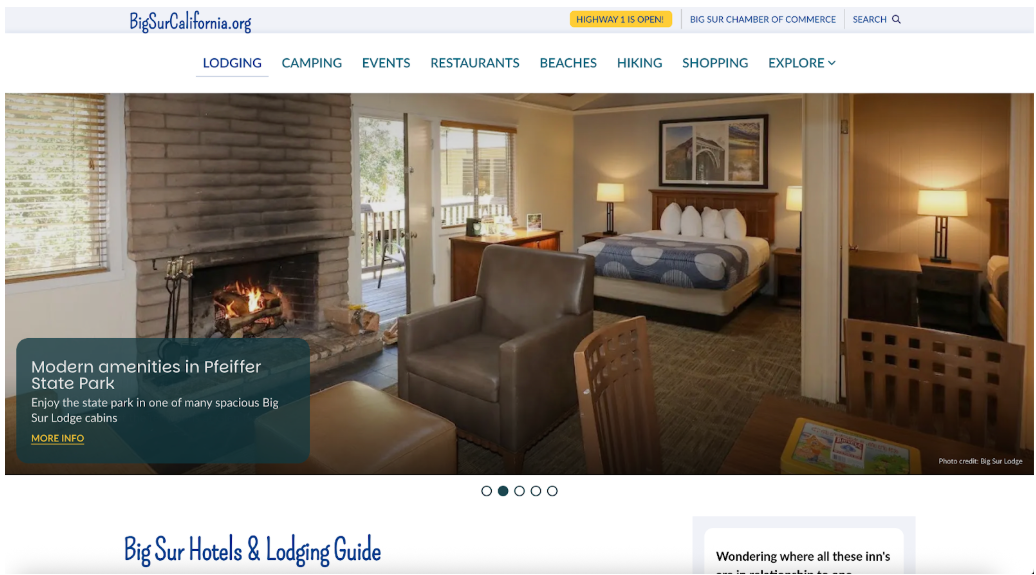
For example, if your rental is in Big Sur, try to get listed on things like this lodging guide published by the Big Sur Chamber of Commerce.
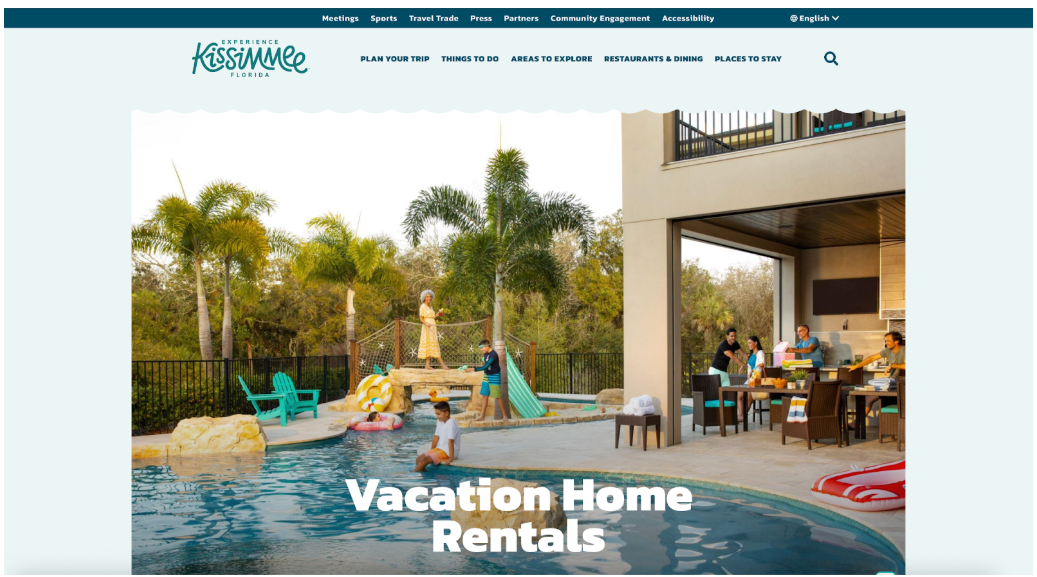
Or if you have a property in Kissimmee, this roundup of vacation rentals from the region’s official tourism authority.
Links and mentions like this are real, not faked to try and manipulate rankings.
These signals compound over time. They tell search engines that your brand is established and trusted and that it deserves to rank.
The Role of Mentions in AI-Powered Search
You’ll often see off-page talked about in the context of links. And these do form the core of it. But in recent years, this part of SEO has expanded beyond links, particularly with the rise of AI-powered search and recommendations.
AI systems rely heavily on trusted sources, repeated mentions, and contextual signals to determine which brands to surface. Being consistently referenced as a recommended place to stay - even without a link - strengthens your visibility across both traditional and AI-driven search experiences.
This makes PR, citations, and authoritative listings more important than ever. Visibility across the web reinforces trust, even when users don’t click through directly. And as we see AI-powered search grow in usage, this will matter even more.
The Role of Directories and PR
For vacation rentals, off-page SEO also includes consistent listings in reputable accommodation directories and coverage in relevant media and press publications.
These signals help search engines confirm legitimacy. More importantly, they help guests feel confident choosing you.
The goal isn’t volume. It’s alignment. Being talked about in the right places, in the right context, for the right reasons.
How On-Page and Off-Page SEO Work Together
On-page SEO tells search engines, “this page matches this search.”
Off-page SEO tells them, “this site deserves to rank.”
Without on-page SEO, authority doesn’t convert into visibility and without off-page SEO, content struggles to rank.
The strongest vacation rental sites invest in both consistently, understanding that SEO is not a one-time project but a compounding asset.
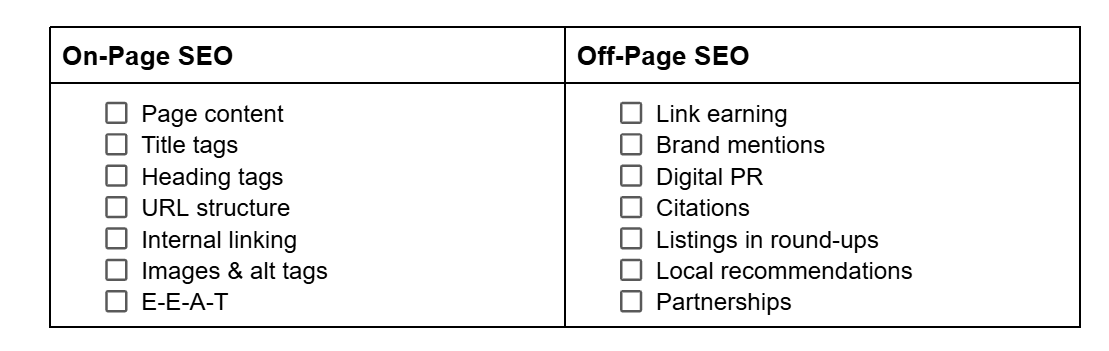
If we’re comparing these as groups of tactics, we can explain these two as:
Why This Balance Is Critical for Driving Direct Bookings
OTAs dominate search because they combine massive authority with comprehensive coverage of search intent.
Vacation rental brands can’t outspend them, or compete on the size and scale of the site, but they can out-specialize them.
By creating content that is more specific, more useful, and more locally informed, and by building authority in the places guests already trust, direct booking sites can compete effectively.
The result is reduced reliance on OTAs, stronger brand visibility, and a more sustainable acquisition channel.
On-Page SEO and Off-Page SEO Aren’t Competing Priorities
On-page SEO and off-page SEO aren’t competing priorities. They are complementary forces.
For vacation rental sites, on-page SEO makes you relevant and off-page SEO makes you trusted. The brands that win at direct bookings invest in both; not as tactics, but as long-term foundations for growth.
You may also like


Download the app
By signing up, you agree to our Privacy Policy and Terms of Service.